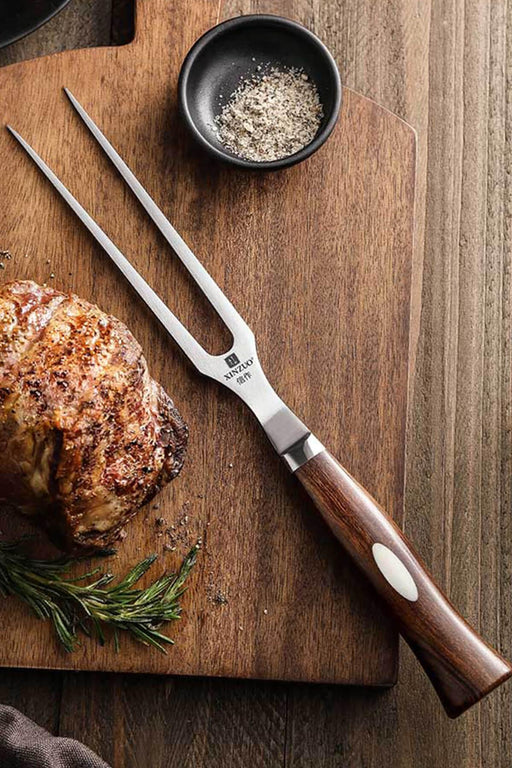
Carving meat is an art that transforms a meal into a memorable dining experience. Whether for a festive occasion or a simple family dinner, the presentation and ease of serving carved meat can make all the difference. A key tool in achieving the perfect carve is a reliable carving fork. Understanding the intricacies of this essential kitchen tool and how to use it effectively can elevate the quality of the meal and enhance the presentation. This article delves into the features and uses of an ideal carving fork, providing insights into mastering the art of meat carving.
Understanding the Carving Fork
A carving fork is designed to hold meat steady while it is being sliced. Its long, sharp tines penetrate deeply into the meat, ensuring a firm grip. This tool is indispensable in maintaining the stability of the meat, allowing for precise and even slices.
Key Features of a Quality Carving Fork
- Material: Stainless steel is a preferred choice due to its durability and resistance to rust.
- Length: A longer fork provides better leverage and keeps hands at a safe distance from the carving knife.
- Handle Design: Ergonomic handles reduce hand fatigue and provide a comfortable grip.
Choosing the Right Carving Fork
Selecting the right carving fork can significantly enhance the meat carving experience. When browsing through carving forks, consider the type of meat most frequently served. For larger cuts like turkey or roast, a robust fork for meat is essential.
Factors to Consider
- Size of Meat: Ensure the fork is proportionate to the meat size for optimal control.
- Grip Comfort: Test the handle to ensure it feels secure and comfortable in the hand.
- Maintenance: Opt for a meat carving fork that is easy to clean, preferably dishwasher safe.
Techniques for Carving Meat
Mastering meat carving involves more than just having the right tools; it also requires proper technique. The following tips can guide anyone from novice to expert in achieving perfectly sliced meat.
Steps for Effective Meat Carving
- Stabilize the Meat: Insert the tines of the meat fork firmly into the meat to hold it steady.
- Identify the Grain: Always carve against the grain to ensure tender slices.
- Slice with Precision: Use a sharp knife to make clean, consistent cuts, keeping slices uniform in thickness.
Maintaining Your Carving Fork
Proper maintenance of a carving fork ensures its longevity and effectiveness. Regular cleaning and correct storage are pivotal in preserving the tool’s condition.
Maintenance Tips
- Cleaning: Wash the fork immediately after use to prevent food residues from hardening.
- Storage: Store in a dry place, and consider using a protective sheath to prevent damage to the tines.
- Check for Damage: Regularly inspect the fork for any signs of wear or damage, especially if used frequently.
In conclusion, mastering the art of carving meat begins with selecting the right tools, such as a reliable carving meat fork. By understanding the features and proper techniques, anyone can turn the act of carving into a culinary art form.